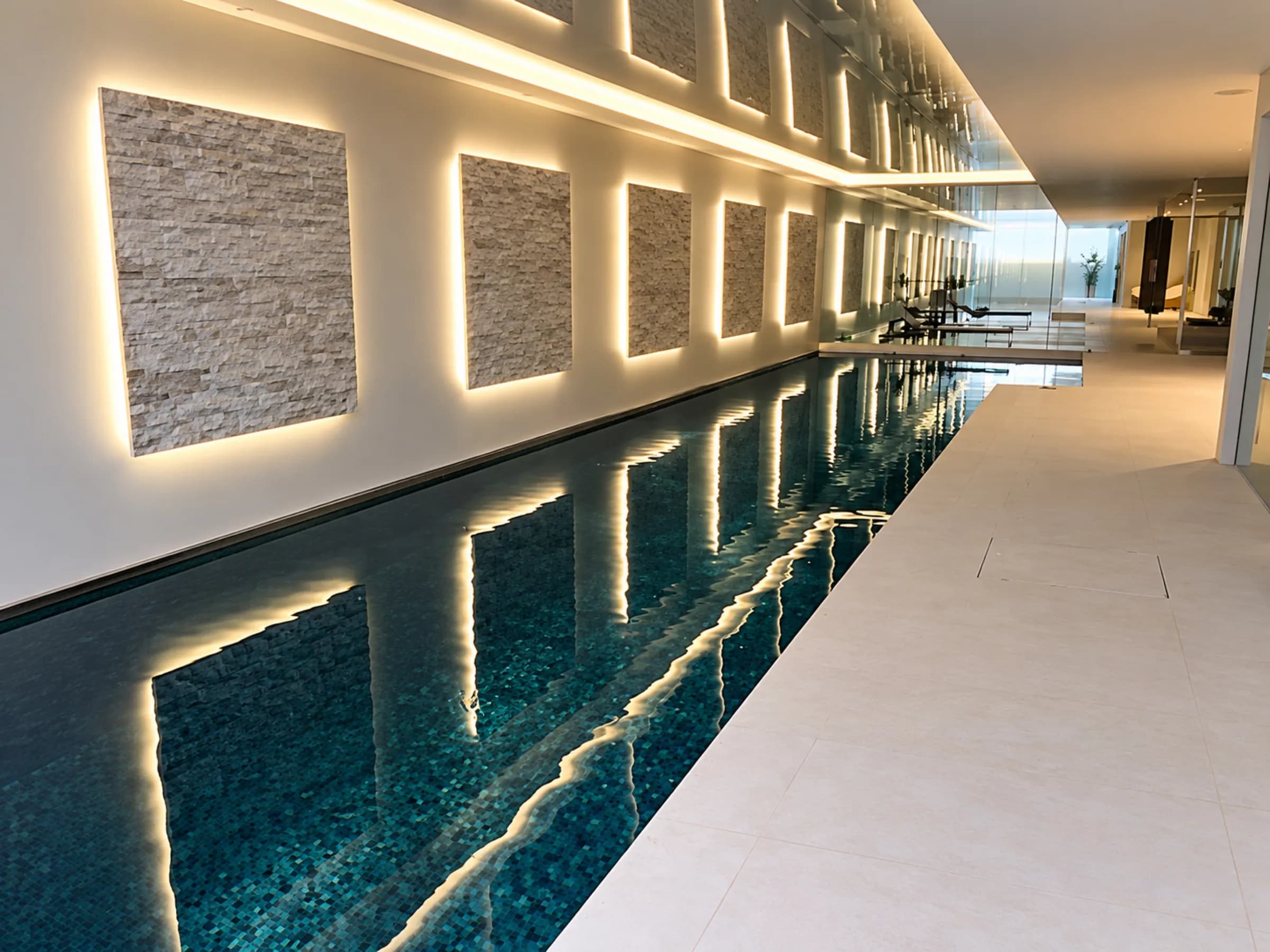
How much does a pool cost?
It depends entirely on the size, site and finish. We take on everything from repairs to builds of £1 million and more, and there's no minimum job. We quote after a site visit, so the figure reflects your project, not a guess.
Is there a minimum job size?
No. We'll happily take on a repair or a small spa as well as a full new build. Projects run from small jobs up to £1 million and more.
How do you work out a quote?
We visit your site, measure up and talk through what you want, then send a clear quote within days. If a visit isn't possible yet, we can price from your measurements and a few photos.
Can I see tile and finish samples first?
Yes. Sample tiles are available, so you can see mosaics, porcelain and natural stone before you choose.
What are your pools built from?
Reinforced concrete. Depending on the site and design that's a sprayed concrete shell, a cast shell, or insulated concrete formwork (ICF) blocks filled with concrete.
How do you make sure it won't leak?
Every shell is rendered and screeded, then reinforcing mesh goes into every corner and junction before a 3 to 4mm mesh-reinforced tanking membrane goes over the lot. Once that's cured, we fill the pool and leave it for a seven-day water test before any tiling starts.
What finishes can I choose?
Recycled glass mosaic, standard mosaic, porcelain tiles and natural stone, with textured safety edging and feature walls if you want them. We also fit automatic covers, filtration, ladders and fencing.
Should I choose cement or epoxy grout?
Cement grout costs less but is porous, so it relies on well-balanced water to last. Epoxy grout barely absorbs water and stands up better to pool chemicals, which is why tiling with epoxy grout carries a 5-year warranty instead of 3.
Do I need planning permission?
It depends on the project and where you live, so it's worth checking early. We can help with the planning side for pool buildings, outbuildings and new builds.
How disruptive is the build?
We keep the site tidy and the disruption as low as we can. For hotels and other businesses we can work out of hours so you keep trading.
How long does a build take?
[Typical timescales from Alin.]
What kind of swim spas do you offer?
Two kinds: a swim spa built bespoke in concrete like one of our pools, or a tiled fibreglass unit that we supply and install for you.
How much space does a sauna need?
Less than you'd think. A home sauna fits in a space big enough for a bath and a separate shower, and it can come with you if you move house.
Can a steam room run off wood?
Yes. As well as standard steam rooms for homes and hotels, we can fit standalone outdoor units with optional wood-fired power and gas or electric backup.
Can you turn a room into a home spa?
Yes. We can turn a reception room, basement, loft, garage or outbuilding into a spa, plunge pool or steam room.
What warranty do I get?
On a new build: 10 years on the sprayed concrete shell, 3 years on render and screed, and 3 years on tiling with cement grout, rising to 5 years with epoxy grout. On a refurbishment: 3 years on render, tanking and cement-based grout, extended to 5 years with epoxy grout. The existing structure isn't covered, which is why every refurbishment starts with a survey.
Can you refurbish my existing pool?
Yes. We start with a survey of the structure and waterproofing. Depending on what we find, we'll repair it, build a new shell inside the old one, rebuild it, or fit a new on-site welded liner.
Do you service and repair pools?
Yes. Our own engineers look after filtration, heating, covers and the rest, with maintenance plans and a warranty on replacement parts.
How long does a pool liner last?
Usually 10 to 15 years, depending on the quality of the liner and how well the water chemistry has been kept. An on-site welded liner can also be a chance to add new skimmers, lights, suction points or steps without rebuilding the pool.
Do you need to drain the pool for a survey?
Not always, but some faults only show once the water is out or the old finish is opened up. Draining needs care, especially where there's groundwater pressure, so it should only be done by someone experienced.
What's the best way to heat an outdoor pool?
It depends on the pool, how much you use it and how long you want the season to last. Air-source heat pumps are usually the most efficient for keeping water warm, especially with a good cover. Gas or oil boilers heat up fastest, electric heaters suit smaller pools and spas, and solar can top up the heating.
How do you stop condensation in an indoor pool hall?
With a climate-control system designed for pool halls, not standard house ventilation. The air is usually kept 1 to 2°C warmer than the water and humidity around 50 to 60%, with warm air directed at glazing and outside walls. Heat recovery stops most of that warmth going to waste.
Do I need a pool cover?
A good cover keeps the heat in, cuts evaporation and chemical use, and keeps leaves out. Automatic slatted covers open and close at the touch of a button. If safety is the reason, choose a cover certified for it: not every cover is, and none replaces barriers or supervision.
What does an automatic chemical controller do?
It measures and doses chlorine and pH automatically, so the water stays balanced without constant testing. Many can be monitored remotely, so we can spot a problem and often adjust it without a visit.
Where do you work?
We're based in Cheam, Sutton and work across London, Surrey and the rest of England.
Do you take on commercial projects?
Yes. We build and refurbish pools, spas, steam rooms and saunas for hotels, leisure centres, holiday lets, guest houses and developers, with better pricing when you're fitting out more than one.
Are you insured?
Yes, we're insured. Ask us for the details when we quote.
Ready to talk about your project?
Get in touch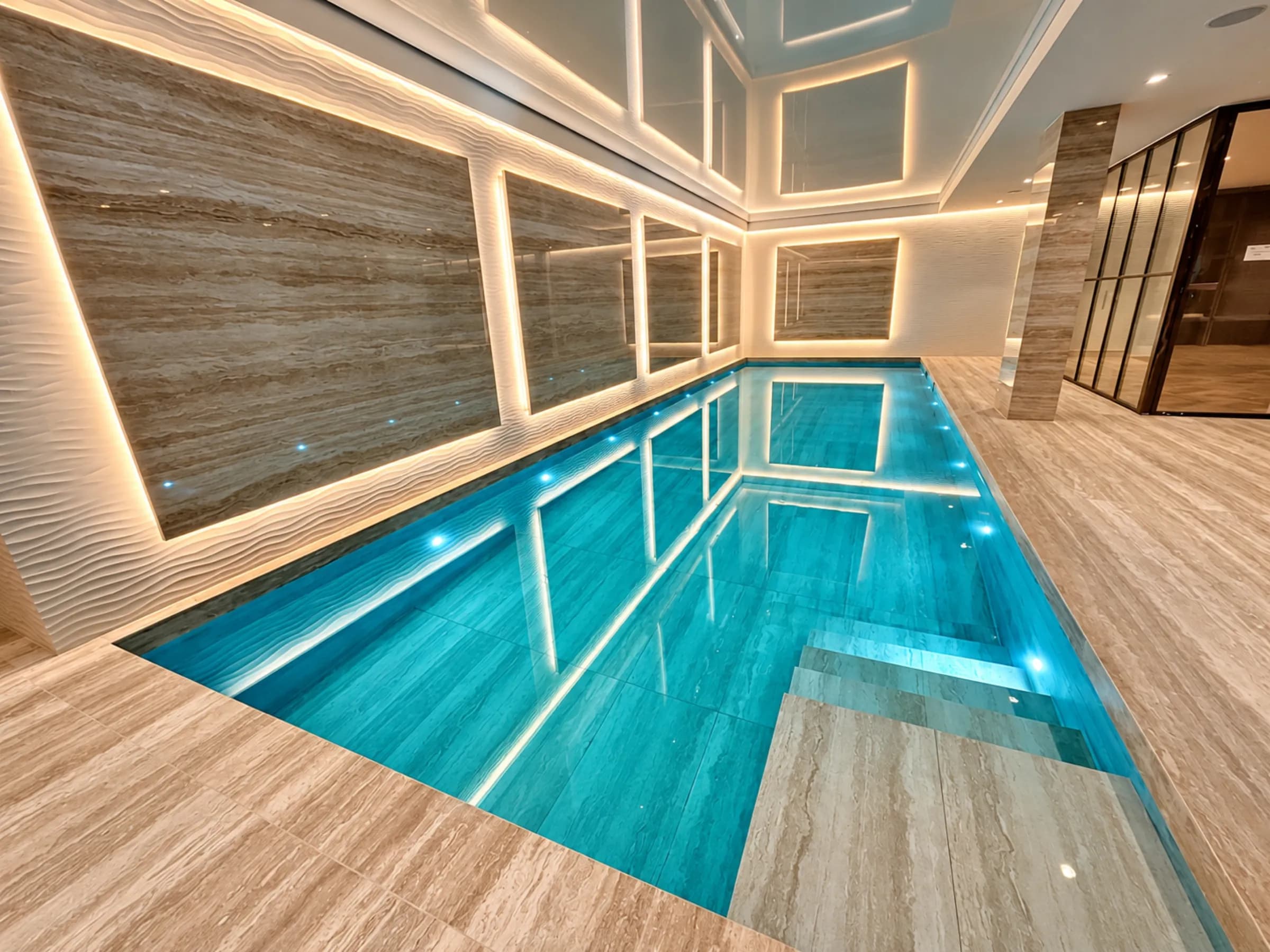
Ready To Plan Your Pool?
Answer a few quick questions and we'll arrange a site visit.