No Single System Suits Every Pool
Outdoors, the right heating depends on the pool's size, how exposed it is, how often you swim and how long you want the season to last. We compare the options on what they cost to fit, what they cost to run and how they cope with British weather.
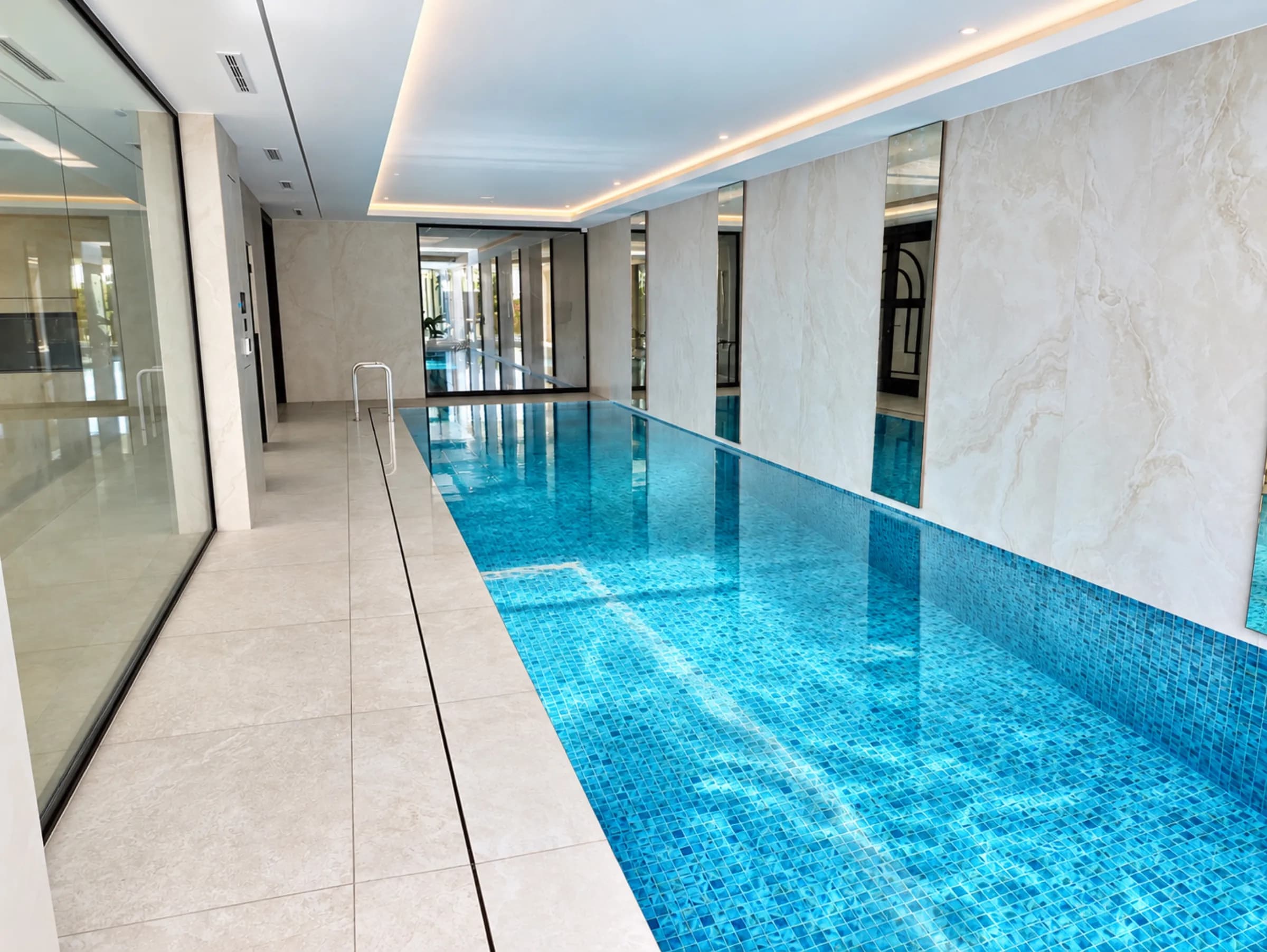
Indoors, heating the water is only half of it. A pool hall needs heating, dehumidifying and fresh air working together, or the moisture ends up on the windows, walls and ceiling. We design the whole system around your building, its glazing and how you'll use it.
Heating Options We Fit
- 01
Air-Source Heat Pumps
Usually the most efficient way to keep water warm, especially with a good cover. Output drops as the air gets colder.
- 02
Gas & Oil Boilers
The fastest way to heat up, and an option where a boiler is already in place. Running costs need weighing up.
- 03
Electric & Solar
Electric heaters suit smaller pools and spas. Solar panels can top up the heating and cut energy use.
- 04
Indoor Climate Control
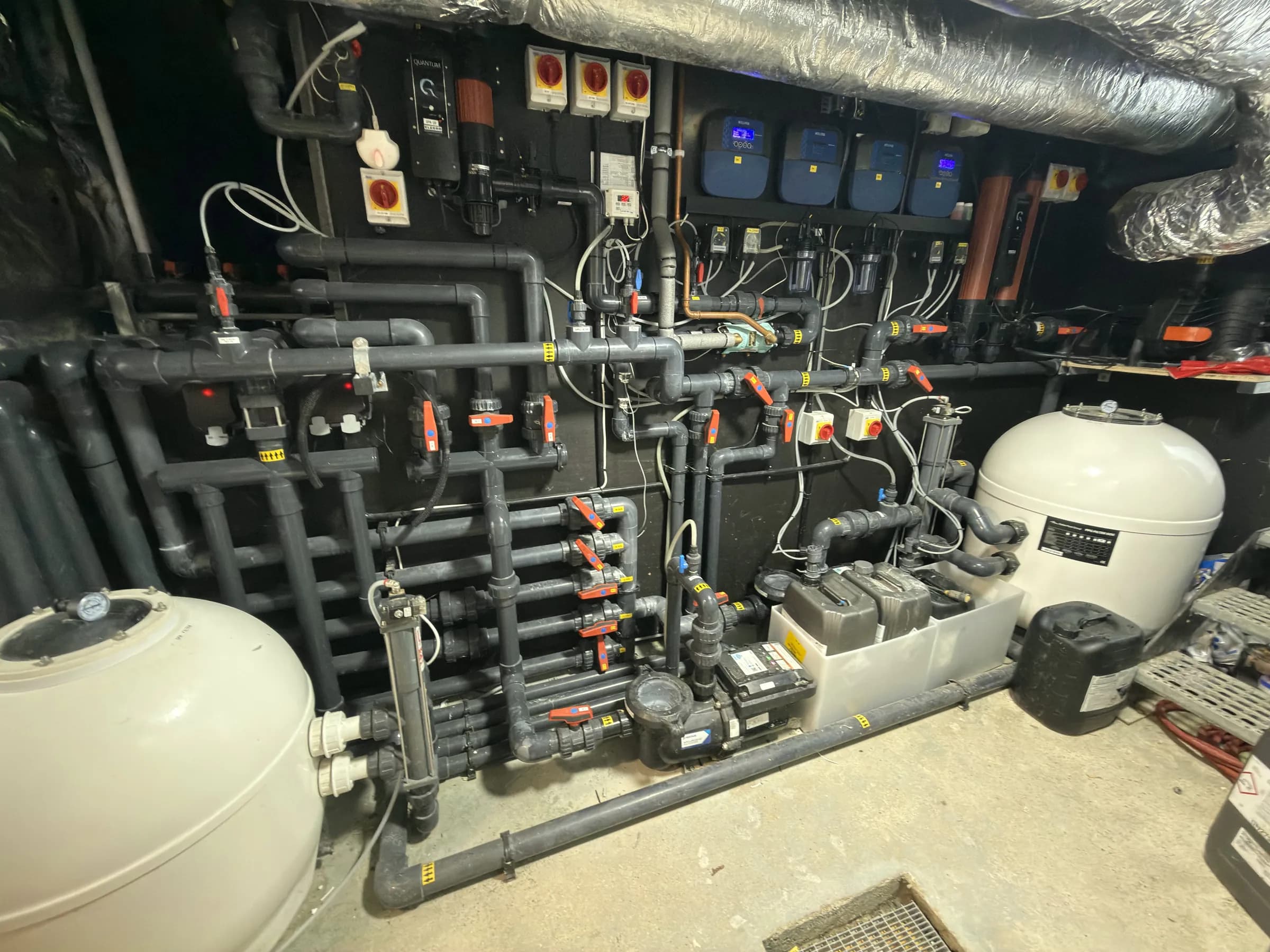
Dehumidifying, air heating, fresh air and heat recovery, either in one integrated unit or as separate parts.
What We Can Design And Fit
- Air-source heat pumps, boilers, electric and solar heating
- Heat exchangers to run pool heating off an existing boiler
- Pool hall dehumidification and fresh-air ventilation
- Heat recovery, so less warmth goes to waste
- Integrated climate-control units, including Calorex, Dantherm and Recotherm equipment
- Air directed at glazing and outside walls to stop condensation
- Covers to keep the heat in
- Servicing and repairs from our own engineers
Recent Work
What's the best way to heat an outdoor pool?
It depends on the pool, how much you use it and how long you want the season to last. Air-source heat pumps are usually the most efficient for keeping water warm, especially with a good cover. Gas or oil boilers heat up fastest, electric heaters suit smaller pools and spas, and solar can top up the heating.
How do you stop condensation in an indoor pool hall?
With a climate-control system designed for pool halls, not standard house ventilation. The air is usually kept 1 to 2°C warmer than the water and humidity around 50 to 60%, with warm air directed at glazing and outside walls. Heat recovery stops most of that warmth going to waste.
Do I need a pool cover?
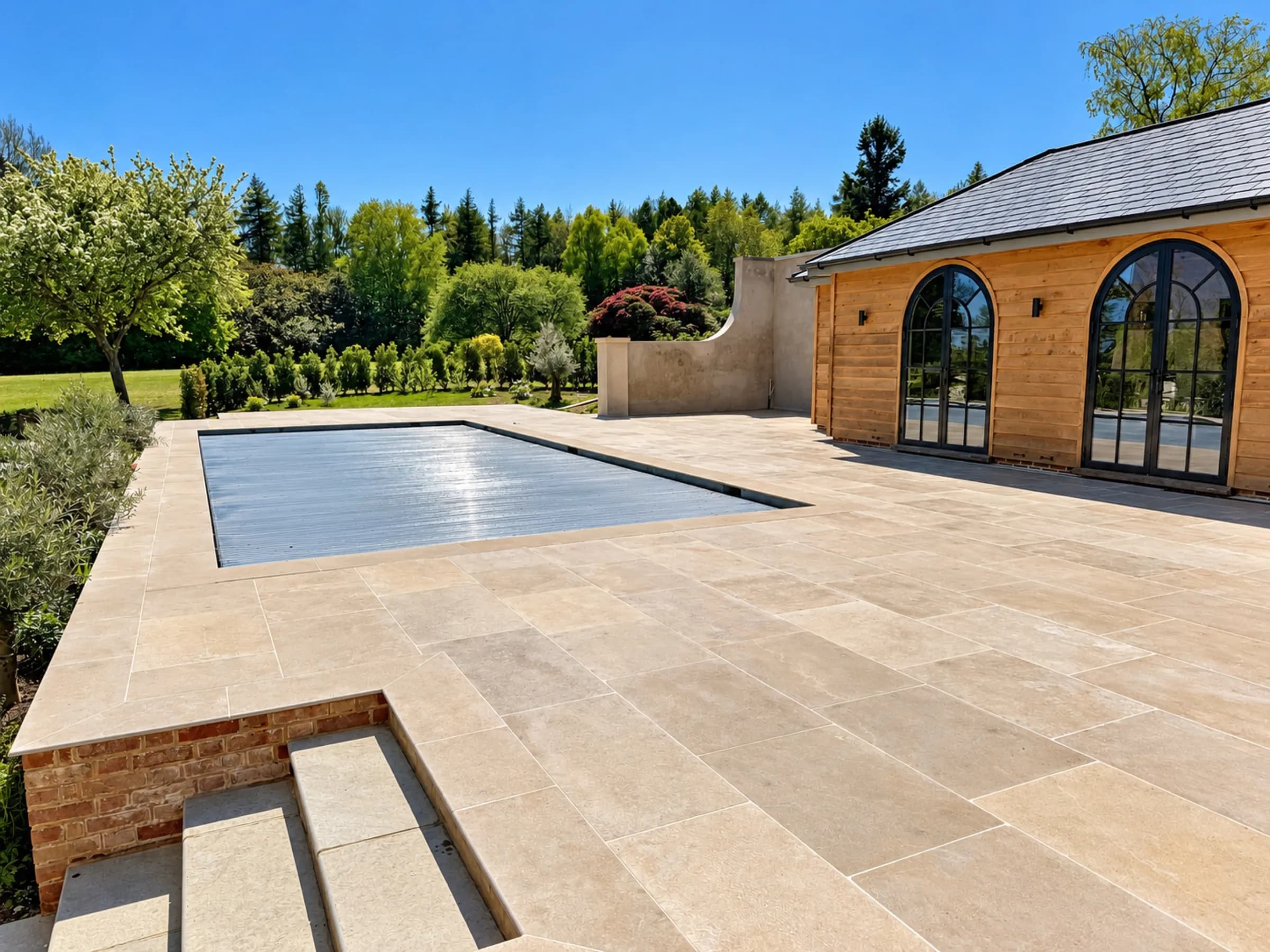
A good cover keeps the heat in, cuts evaporation and chemical use, and keeps leaves out. Automatic slatted covers open and close at the touch of a button. If safety is the reason, choose a cover certified for it: not every cover is, and none replaces barriers or supervision.
Related Services
Ready To Plan Your Pool?
Answer a few quick questions and we'll arrange a site visit.